
The first few days in Enschede felt quiet and a little strange. The city was clean, the bikes rolled past calmly, and everything seemed in place. But when it came to food, something was missing. One morning, I sat in the kitchen of my dorm room, staring at a bowl of cereal. The milk was no longer cold, the flakes were soggy, and each spoonful felt more like routine than comfort. As I chewed, my thoughts wandered to a plate of nasi kuning.
Nasi kuning, or yellow rice, is a traditional Indonesian dish made with turmeric and coconut milk. It is often served during special occasions like birthdays or celebrations, usually with fried chicken, sambal, boiled eggs, and other side dishes. Aside from being served during special occasions, it is also commonly eaten for breakfast. It’s not just food; it’s a memory of mornings at home and the comforting smell of something warm and familiar.
I knew Indonesian food existed here in the Netherlands. In bigger cities like Amsterdam or Den Haag, there were plenty of options. But I was in Enschede, and here, Indonesian food was either hard to find or too expensive for a student budget. Eating out often was not a choice I could make.
As an IISMA student staying in the Saxion dorm for six months, I had to figure out how to live well without spending too much. I had a small shared kitchen, a shared fridge, and a list of dishes I missed from home. Nasi kuning was at the top. I was not planning to cook from scratch. I just wanted a pack of instant seasoning that I could mix with warm rice. That was all it took to bring back the flavor I longed for. A spoonful of that familiar taste could turn an ordinary day into something comforting and familiar.
One afternoon, my friends and I rode our bikes from the dorm to visit two Asian shops that other students had recommended. The first was Peter Hu, located on Waldeckstraat 10, and the second was Toko Het Oosten, on Deurningerstraat 94. They were not far apart, so we planned to visit both on the same day. Peter Hu and Toko Het Oosten in Enschede were my go-to spots for affordable Asian ingredients, each offering unique advantages in product variety, prices, and opening hours.
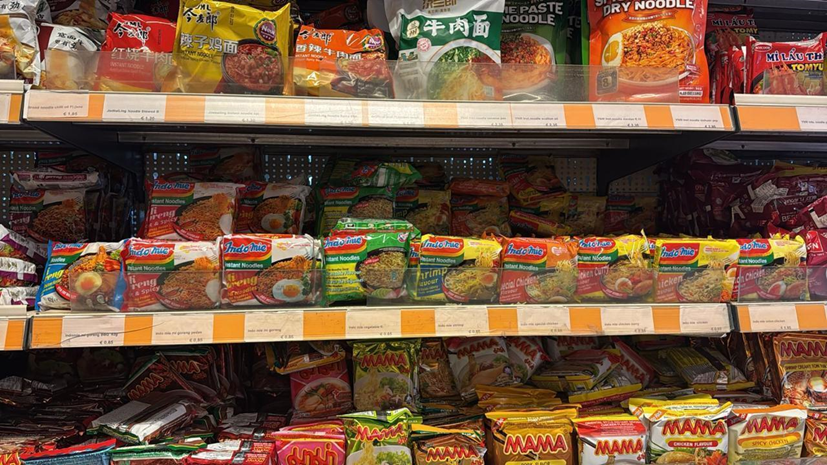
Peter Hu: Bigger Selection, Standard Prices.
As soon as I walked into Peter Hu, I was greeted by shelves packed with Indomie packages. Indomie is a popular brand of instant noodles from Indonesia. It is known for its rich flavors and quick preparation. The bright colors of the packaging stood out right away. It felt like I had just stepped into a small store back home. The noodle section was full. They had mie goreng, curry, shrimp, and other flavors, stacked neatly in rows. I could almost hear the sound of boiling water and imagine the warm, comforting taste of instant noodles on a cold day.
Peter Hu is one of the biggest Asian stores in Enschede. They sell vegetables, sauces, frozen snacks, tofu, and a wide range of Asian spices. I came here looking for instant nasi kuning spice mix, and I found the exact one I needed from Kobe. “Just mix this with warm rice, and it tastes so good.” My friend told me with a smile. I opened it later in the dorm, and the smell of turmeric and coconut filled the kitchen. The rice turned yellow, soft, and a bit sticky, just like I remembered from family breakfast at home.
What really surprised me was how complete the store was. They offered not just Indonesian ingredients, but also cooking items from other Asian countries. I saw meat products, frozen snacks, and even chicken feet, which caught me off guard. In one corner, I spotted a shelf full of herbs. The air around it smelled earthy, warm, almost like a traditional kitchen back in Asia. They also had packaged sambal, which is a type of chili paste we usually eat with rice or fried dishes. I tried one, but it tasted more sour than spicy, maybe because it was pre-packaged. They also had many types of sauces like oyster sauce, black pepper sauce, sesame oil, and more. It was easy to find what I needed, even on my first visit. The prices were reasonable too, not too cheap, and not too expensive. The shop was open from 10:00 to 18:00, from Monday to Saturday. It was closed on Sundays.

Toko Het Oosten: Smaller, but Affordable.
After going to Peter Hu, I wanted to help my friend by taking them to Toko Het Oosten to look for koyo. Koyo is a patch you stick on your skin that gives a warm feeling and helps relax sore or stiff muscles.
When we stepped into the store, I noticed the smell of dried herbs and bottled sauces. Toko Het Oosten was smaller than Peter Hu, but the shelves were packed full of Asian basics. We walked slowly down the narrow aisles when suddenly my eyes landed on something familiar. There it was: Teh Botol, my favorite drink.
The red boxes stood out clearly. I could already imagine the taste. The sweet jasmine tea flowed smoothly in my mouth, carrying a light floral scent. My throat felt dry just thinking about it. I pictured myself in the dorm enjoying it with a plate of hot nasi kuning.
My friends noticed right away. One of them grinned and pointed at the shelf. “Aya, look. It is your favorite!” Another friend laughed. “You have to get it.” I reached out and grabbed a lot.
Toko Het Oosten might have been smaller, but some prices were cheaper than those at Peter Hu. This made it more beneficial for students. The shop was open from 12:00 to 18:00, Monday to Saturday, and closed on Sunday.
Visiting both Peter Hu and Toko Het Oosten made me smile because they each had something special. Peter Hu impressed me with how much it had. The shelves were full of Indomie, spices, sauces, frozen snacks, and even chicken feet. It felt like a treasure hunt. I could walk around for a long time just looking at everything and finding all the little things I missed from home. If I wanted something very specific or planned a big cooking day, this was the place to go.
Toko Het Oosten was smaller, but it surprised me too. Some things were cheaper, which made it a great option for students like me looking to save money. Sure, it did not have as many choices, but it had the basics I needed for a quick stop. The shop felt cozy, and even though the aisles were tight, it was easy to find what I came for.
In the end, I realized both shops were useful in different ways. For big shopping trips, I would pick Peter Hu. For small and budget-friendly buys, I would go to Toko Het Oosten. It was fun to visit both and see how they each added to my little grocery adventure.


 Corners of enschede
Leave a comment