
On a crisp autumn Saturday in Enschede, a city in the province of Overijssel and the Twente region of the eastern Netherlands, I woke up to the comforting warmth of my blanket. My eyes were still heavy with sleep. The heater in my room at the Saxion University dorm made it even harder to leave my cozy bed. But as my stomach let out a loud grumble, the thought of an empty fridge sank in. I had no choice but to get up and face the chilly morning.
As an international student at Saxion University on a six-month exchange program through the Indonesian International Student Mobility Awards (IISMA) scholarship, I wanted to make the most of my time in the Netherlands by exploring as many places as possible. That morning was a perfect chance to do that.
I needed groceries. Then, I remembered the traditional market in Enschede’s city center, which is open every Tuesday and Saturday. I asked my friends to come along since it was a great chance to buy fresh food at low prices. The market was about 1.5 km from our dorm, so we walked there and felt the cool morning breeze on our faces while the sun cast a golden glow over the quiet streets.
This market is popular with both locals and students because it offers vegetables, fruits, seafood, snacks, and even clothes at affordable prices. Many international students prefer shopping here instead of supermarkets because they can get various good-quality products for less money. Local people call this market Wochenmarkt Enschede, a German word that means ‘weekly market’. However, many people are unaware of its actual name. It is often referred to as the “Enschede market” for simplicity. International students may not know the official term at first, but locals or other students usually introduce them to this easier-to-remember name. The Wochenmarkt Enschede is a budget-friendly destination for locals and international students, offering fresh produce, local specialties, and a cultural experience.
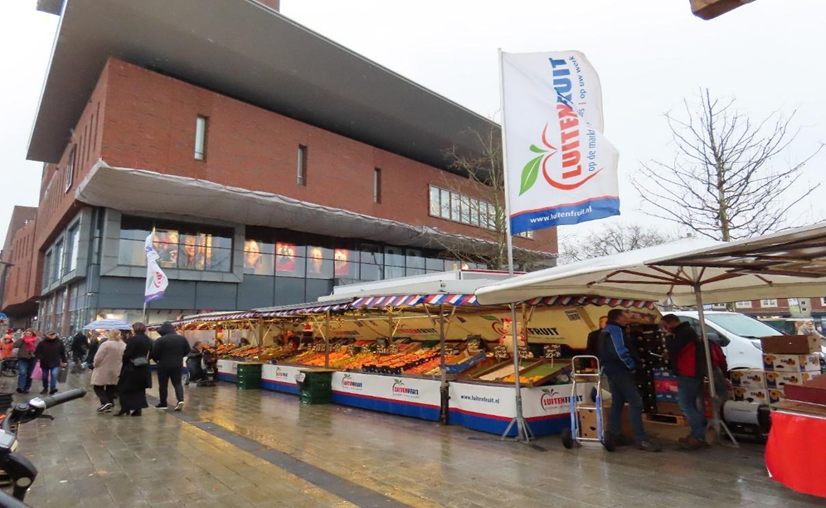
Fresh produce and local flavors filled the market with color and life.
As soon as we arrived, we saw many people filling the market. Sellers called out. Their voices were mixed with the sounds of footsteps and rustling bags. Shoppers moved from stall to stall. Their hands were full of fresh produce. My friend was busy choosing chili peppers, while I stood still, and my eyes locked on the piles of mangoes, apples, peaches, strawberries, and melons. The colors were so bright, and the sweet smell of ripe fruits filled the air. Sellers encouraged us to sample their fruits by offering sliced various fruits to us. “These strawberries are sweeter than those I’ve had back home!” I told my friend, biting into one. I had tried many fruits here: mangoes, apples, peaches, and melon, but the strawberries were still my favorite.
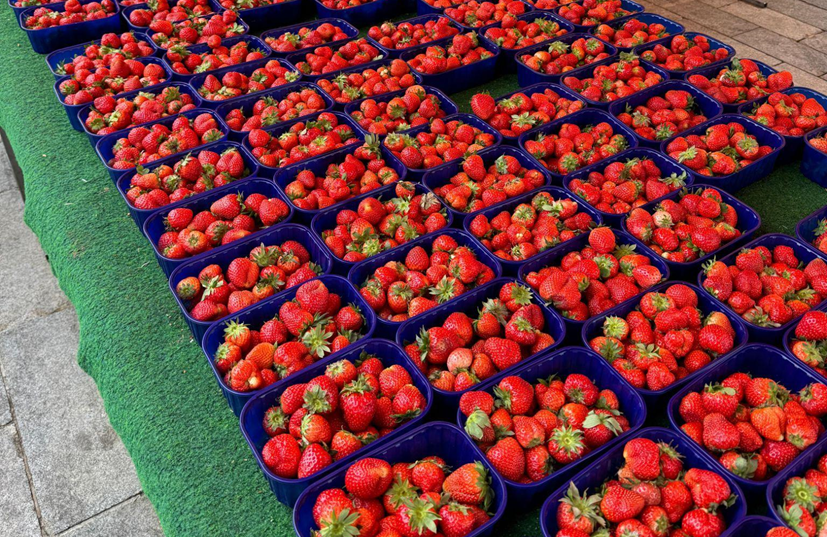
These fruits were as fresh as they looked.
Fruits here tasted juicier and fresher than those in Indonesia, but the biggest difference was the mangoes. Unlike the ones back home, mangoes here stayed green and were much larger. They had a crisp texture with less juice, making each bite refreshing and slightly tangy.
“They’re crunchy and a bit tart, but I kind of like them,” I laughed, taking a small bite of mango. Still, they were perfect for the rujak my friends and I often made.
Rujak is a popular Indonesian fruit salad, typically made with a mix of fresh fruits and drizzled with a sweet, spicy, and slightly tangy peanut sauce. It’s a perfect balance of flavors: fruity sweetness, a hint of sourness, and a kick of chili heat. The mangoes here turned out to be just right for it.
At just €2–6[1] per kilo, they were a great deal, especially for something this fresh and delicious.
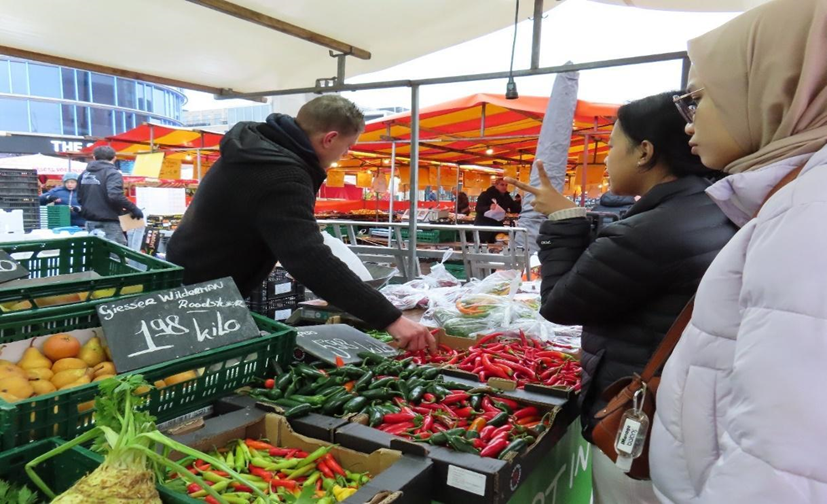
We call the seller uncle!
Right next to the colorful fruits, the vegetable stalls were just as lively and inviting. The vibrant display of fresh produce caught our eyes: leafy greens stacked high, bright orange carrots glistening under the sun, and cucumbers with dew drops still attached to their skin.
We always called the seller “Uncle” because he asked us to do so. Thus, whenever we wanted to buy vegetables, we would say, “Let’s buy vegetables from Uncle.” It had become our little habit, and he always greeted us warmly whenever we stopped by.
My friend picked up a handful of small, glossy chilies and chuckled. “They’re like chilies for kids,” she joked while waving them at me. She was right. These peppers were sweet and mild. They added color without too much heat.
Nearby, we spotted another variety resembling cabai rawit, but the price was €5 per kilo for a tiny bag. It made us hesitate.
In Indonesia, cabai rawit is known for its extreme spiciness. These tiny chilies may look harmless, but even a small bite can set your mouth on fire. They are a staple in Indonesian cuisine. It is often used in sambal (spicy chili paste) or eaten raw as a side to enhance the flavor of dishes. At first, we thought the chilies here might be just as fiery, but after trying them, we realized they were much milder and sweeter than Indonesian cabai rawit. It was a huge contrast to what we were used to back home. A single bite of cabai rawit could leave us gasping for water.
The variety seemed endless, and soon our baskets were filled with shiny eggplants, plump red tomatoes, bundles of crisp bok choy, and fresh garlic and onions. The seller noticed us hesitating over a pile of spinach and quickly picked out the freshest bunch for us. “This one’s the best,” he said with a smile. It’s this warm, personal touch that kept us coming back. As we left the market, we imagined the dishes we would make.

Bright colors and cheerful blooms offered a moment of calm in the middle of the bustle.
As I turned the corner, I stopped in my tracks as bursts of color filled my vision. Bright yellows, soft pinks, and deep reds stood out under the warm glow of string lights. Buckets were filled with tulips, daisies, and roses. Their petals were kissed by drops of morning dew. The soft rustle of paper as someone wrapped a bouquet mixed with the hum of chatter and laughter. The earthy scent of fresh leaves lingered in the air. It was subtle yet soothing, though not as rich as the flowers back home.
Flowers here were incredibly popular. Mothers, young adults, and even teenagers stopped by to pick out bouquets. Flowers held a special meaning, whether as decoration or gifts. They weren’t just something beautiful to look at, but also a symbol of love and appreciation.
I remember the day I spent €10 on a bouquet for a friend. I chose pink roses, her favorite, and the florist added small, shiny plastic ornaments that matched the flowers. It looked simple but elegant. She was so happy when I gave it to her, and seeing her smile made it worth every cent. These stalls always drew me in. Their charm was impossible to resist. They offered not just flowers but a small moment of happiness.
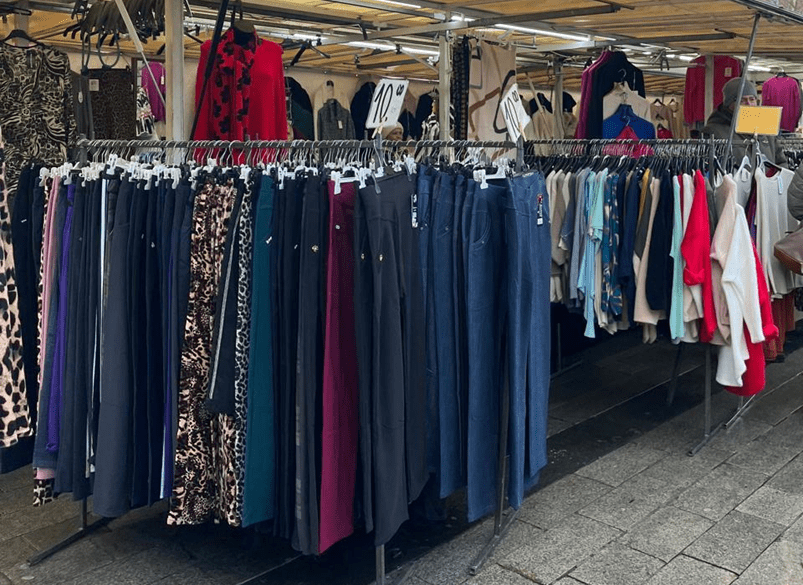
The pants were too long for us.
At the far end of the market, stalls full of second-hand clothing and accessories attracted our attention. Navy and olive jackets, wool scarves, and winter boots were lined up in neat rows, with textures ranging from the softness of fleece to the roughness of leather. A seller was organizing the racks, the metallic creak mingling with the chatter of customers discussing prices. The air carried a mixture of scents: aged fabric mixed with a hint of lavender, perhaps from a sachet tucked into a coat pocket.
Finding the right size, however, was a challenge. Most of the pants were too long for us, a reminder of how tall people here were. Not everything here was second-hand, but the appeal lay in finding which items were which. One stall displayed vintage fur hats. Their brims were slightly worn but still luxurious to the touch. Another stall displayed pristine, second-hand but well-preserved winter jackets. Their zips glinted in the soft sunlight. I once rubbed a pair of black boots. The leather felt cool and smooth. I could imagine the miles traveled with the previous owner.
Beyond the clothes, a group of tables displayed a wide variety of unique things. Ornate clocks with tarnished brass faces sat next to porcelain figurines, with faded paintings. A customer held a gemstone. Its surface caught the light and cast a small rainbow onto a nearby scarf. The joy here was not just in the purchase, but also in the search and the stories behind it.
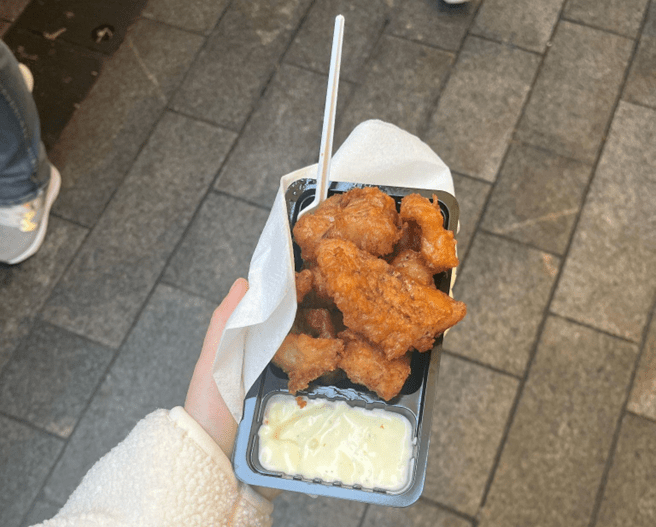
I can smell the kibbeling from this picture.
The food section was where the market truly came alive. The smell of Kibbeling, a local specialty of battered fried fish, is impossible to ignore. The texture was crispy on the outside and tender on the inside. It was also served with sour cream sauce. For €6, you will get a portion big enough to share.
Besides Kibbeling, the market had plenty of other food options. Stalls offer a variety of cheeses, burgers, fries, waffles, donuts, and other sweet treats. Sometimes, I even spotted a stand selling Indonesian snacks, bringing a little taste of home to the market.
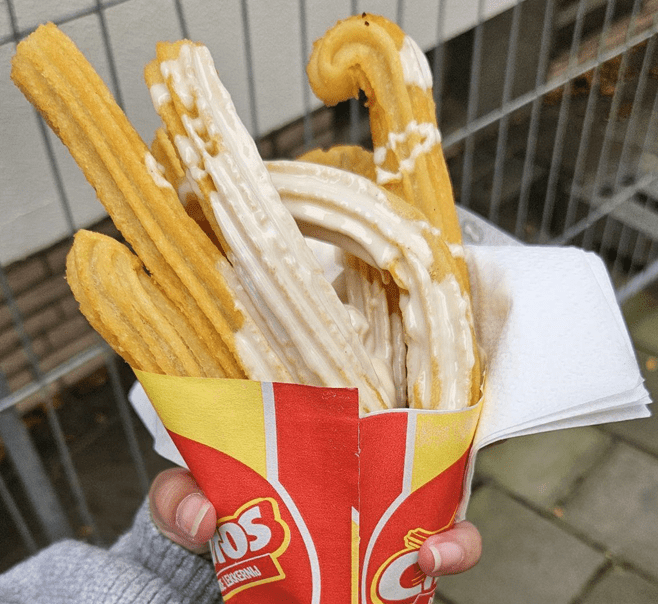
Churros were warm, sweet, and completely irresistible.
Then there was my true love: churros. The first bite was always the best. It was crispy on the outside, soft, and slightly chewy on the inside. The white chocolate melted into every ridge, making each bite even more indulgent. Holding the warm paper cone in my hands while strolling through the market felt comforting, like a small moment of happiness wrapped in sugar and chocolate. Even on colder days, I never minded waiting in line.
My friends teased me endlessly, saying, “Aya and churros are soulmates. You two can’t be separated!” They were not wrong. I’ve never left the market without a bag of churros in hand.
With our shopping bags full, we decided to head home. We were all hungry and eager to cook together. The walk back was filled with laughter and conversation, and our hands were weighed down by fresh ingredients from the market. The crisp autumn air made us walk a little faster, excited to cook and enjoy a hearty meal at home.
[1] All the prices mentioned in this article might change because of the currency fluctuations.


 Corners of enschede
Leave a comment